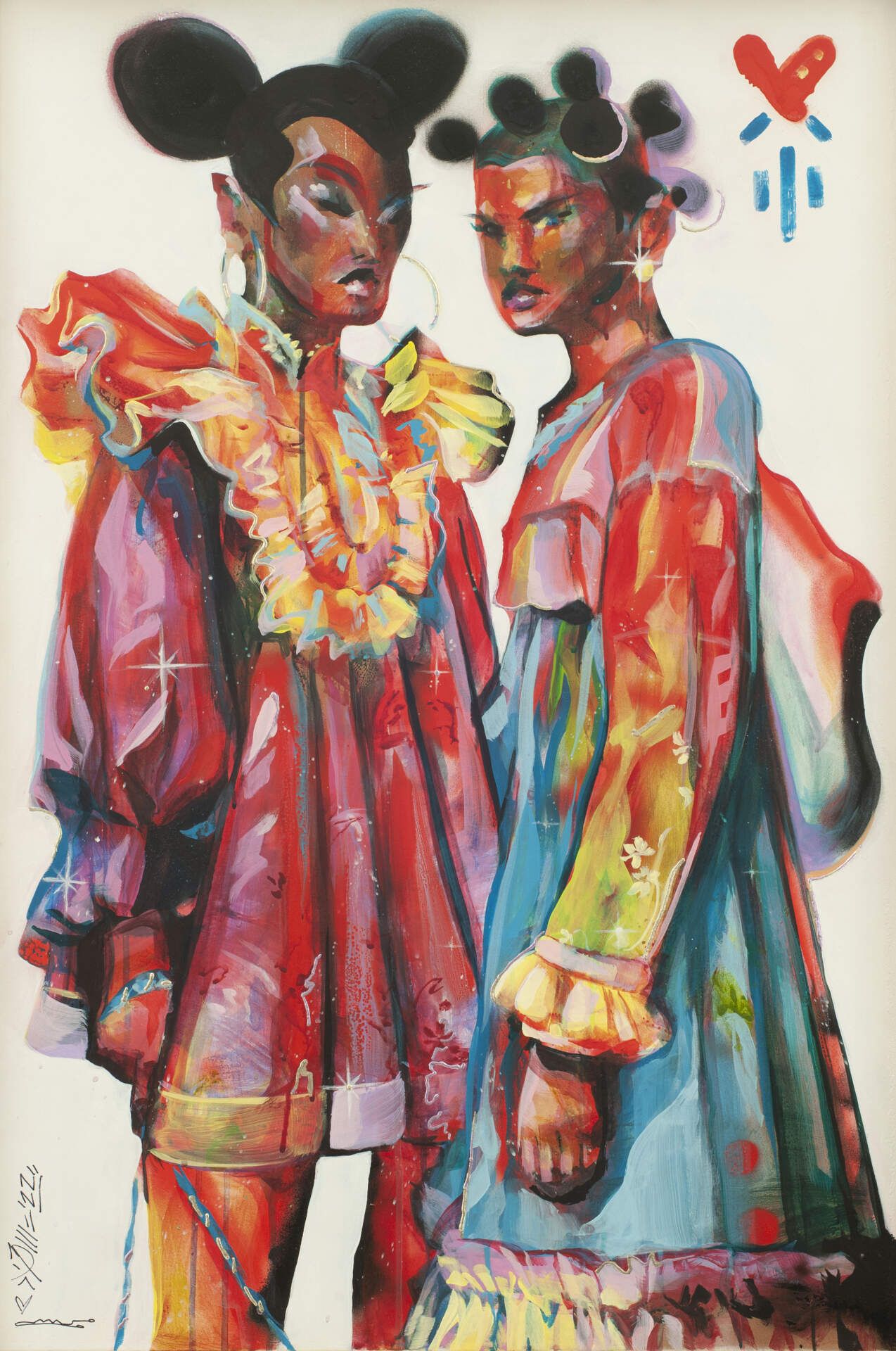
XIII, Viktor and Rolf at Couture Spring 2020, 2022; acrylic and foil on canvas, 37 1/2 inches x 25 3/8 inches; Burchfield Penney Art Center, Purchase, Equity in Arts Fund, 2023
FIT: Buffalo Fashion, Identity, and Transformation
On View
Jul 9, 2026 — Nov 1, 2026
The vibrant energy of the contemporary local fashion scene comes from a multigenerational network of dedicated designers, artists, and cultural innovators who are boldly transforming the city's creative landscape. Their efforts have significantly shifted Buffalo’s reputation from being one of America’s least fashionable cities[1] to a place with a bustling fashion and art scene. While this fashion renaissance might seem like a recent development driven by underground subcultures gaining prominence, it aligns with a long-standing tradition of artists challenging mainstream limitations and subverting dominant narratives to create more inclusive, accessible, and representative spaces for a diverse majority rather than a select few.
FIT: Buffalo Fashion, Identity, and Transformation explores the creative output of a region where fashion, art, community, and economics are deeply interconnected. The artists featured in the exhibition have documented and responded to Buffalo’s evolution from an industrial center to a forgotten city in decline, and now to a culturally rich community full of potential. Their practices span media, ranging from photography, painting, and mixed media to creative direction, fashion design, and illustration. FIT celebrates how artists have long reflected on and innovated the integration of creative expression through fashion within the region’s broader ecosystem.
Historical works provide context for Buffalo’s industrial roots, characterized by early twentieth-century economic prosperity, material wealth, luxury, and the rise of the cultural and social elite. Other works depict the lives and styles of the working class, chronicling the development of Buffalo’s diverse communities built by immigrants, minorities, and everyday people. Looking inward, artists have expressed their unique identities and cultures, utilizing fashion and textiles as a means of social critique, activism, and resistance to dominant heteronormative binaries.
Contemporary works reshape high-end fashion as both accessible and equitable, while emphasizing sustainability. Upcycled materials are a prevalent trend, as local designers become more mindful of the fashion industry’s environmental and economic impact worldwide. The fusion of material utility with sports, music, and streetwear captures the essence of the city’s blue-collar ethos and encourages cross-industry collaboration. As artists build strategic partnerships across business and cultural sectors, their efforts are innovative ways to sustain creative practices. Such collaborations are crucial to ensuring long-term viability and creating a more equitable and stable cultural landscape. Consequently, FIT signifies multiple concepts, from the tailored fit of garments to fashion’s function in personal expression and community empowerment. Collectively, this exhibition celebrates how arts and fashion inspire a community dedicated to authentic expression and vitality.
SUPPORT FOR THIS EXHIBITION
FIT: Buffalo Fashion, Identity, and Transformation has been made possible through the generous support from the Cameron and Jane Baird Foundation and Cynthia Baird Stark; and Shelley Drake, in loving memory of Kenneth C. Drake. We gratefully acknowledge an Anonymous Donor, the Margaret L. Wendt Foundation, Cheryl Lyles and Steven Lakomy, MD, and Erik and Gina O'Neill for their leadership giving.
[1] Harry Cheadle, “Do People Really Dress like S*** in Buffalo?,” VICE, February 21, 2013, https://www.vice.com/en/article/do-people-really-dress-like-shit-in-buffalo-000429-v20n2/